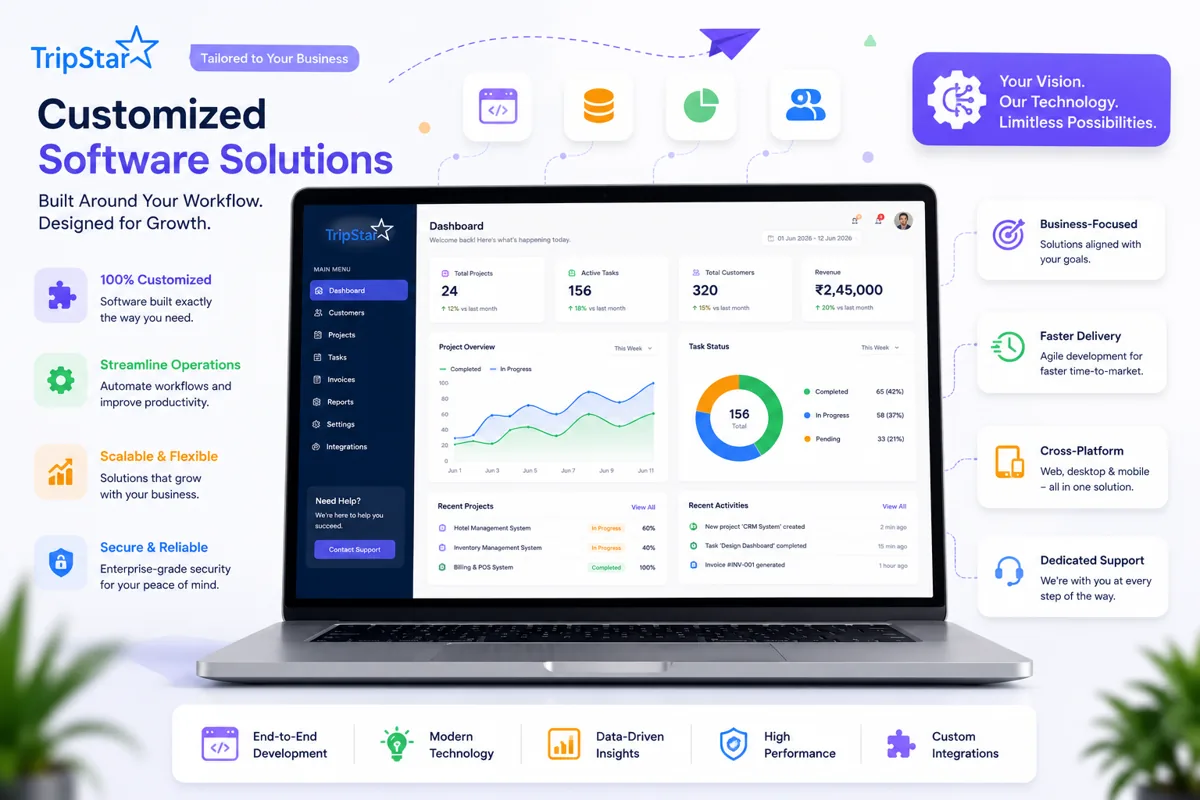
Custom software is designed around a business's requirements, especially when standard software may not support specialized workflows. This guide explains what it is, what can be built, how development works and how to choose a partner.
1. What Is Custom Software Development?
It is the process of designing and building software for a business's own requirements. Examples include CRM, ERP, HRMS, POS, inventory, booking systems and custom web applications.
2. Why Do Businesses Need It?
Custom software may help manage specific processes, organize information, reduce repetitive work, connect business functions and support changing requirements. It is not automatically better than ready-made software, so the decision should come from your actual needs.
3. What Types of Software Can Be Developed?
- CRM: for customers, leads and sales follow-ups.
- HRMS: for employee records, attendance and leave.
- ERP: for connecting business functions such as accounting, inventory, purchasing and sales.
- POS: for billing and retail operations.
- Inventory systems: for tracking stock, purchases and movements.
- Booking systems: for businesses that take reservations.
- Custom web applications: built around your own workflows.
You can see these starting points on the Tripstar Customized Software page.
4. Ready-Made vs Custom Software
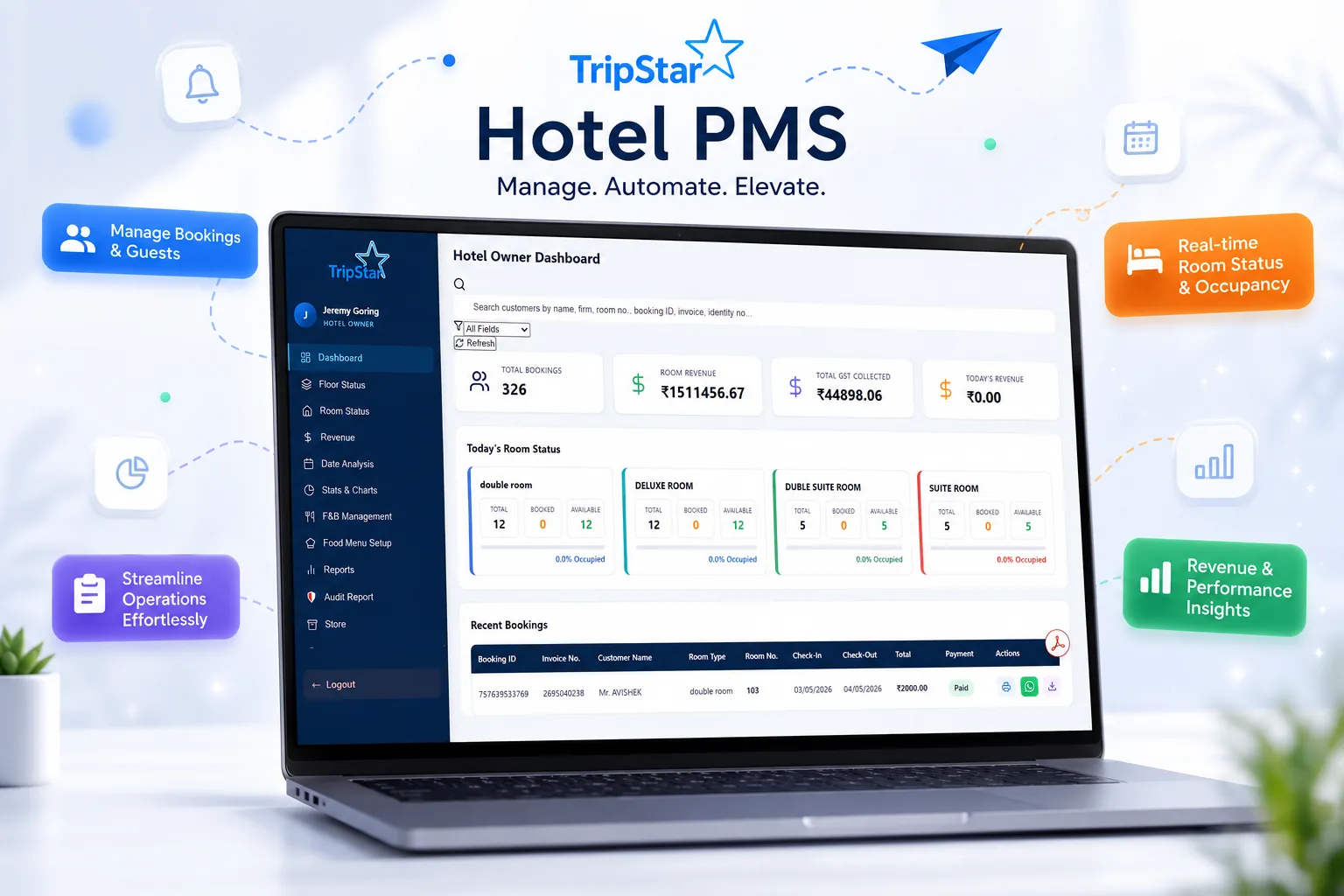
Ready-made software has predefined features and may be faster to start with. Custom software is built around your specific needs but requires planning and development time. Choose based on your requirements, budget and long-term plans. For standard needs, a ready-made product can be the better fit. For example, Tripstar offers ready-made products such as the PMS and POS.
Not sure whether you need custom or ready-made software?
Discuss it with Tripstar →5. How Does Development Work?
Typical stages are requirement analysis, planning, UI/UX design, development, testing, deployment and agreed maintenance.
6. Can It Serve Different Industries?
Solutions may support hospitality, retail, healthcare administration, education, e-commerce, professional services and logistics.
7. Can It Integrate With Existing Tools?
Where APIs and permissions allow, integrations may include payment, WhatsApp, email, maps, accounting, external APIs and other systems.
8. How Much Does It Cost?
Cost depends on the modules, features, platforms, design, integrations, user roles, data migration, security, infrastructure, testing and maintenance involved. A clear scope agreed up front is the best way to understand the investment.
9. How to Choose a Development Company?
Assess how well the team understands your requirements, its technical capability, the scope it proposes, communication, testing, documentation and post-deployment support.
How Does Tripstar Help Businesses?
Tripstar provides custom web applications, CRM, HRMS, ERP, POS, customized business systems and white-label solutions, subject to project scope. The aim is enterprise-level capability at a reasonable investment, with the scope agreed before development begins.
If your need is a business website rather than a custom application, see our web development services. If your project is a mobile app, read Mobile App Development for Businesses.
Frequently Asked Questions
What is custom software development?
Building software around specific business requirements and workflows.
Is custom software better than ready-made?
Not always. Ready-made may suit standard needs; custom may suit specialized requirements.
How long does it take?
It depends on features, complexity, integrations, testing and scope.
Can small businesses use custom software?
Yes, if it is proportionate to their needs and budget.
Can it work on mobile?
Depending on requirements, it can be built for web, Android, iOS or multiple platforms.
Can it integrate with other apps?
Where APIs, permissions and technical feasibility allow.
Does it require maintenance?
It may need security updates, compatibility updates, bug fixes and improvements.
Does Tripstar develop for different industries?
Tripstar works on custom requirements across business functions, including CRM, HRMS, ERP, POS and applications.
Conclusion
Custom software gives businesses the flexibility to build around their workflows and goals. Start by defining the problem you want to solve and the solution you need, then contact Tripstar to discuss your requirements.
Read next: Mobile App Development for Businesses: Benefits, Process and Key Features

Tripstar Team
We build PMS, channel manager and booking engine software for hotels across India.