Getting listed on an online travel agency is easy. Getting bookings from it consistently is not. Most hotels sign up on Booking.com, MakeMyTrip and two or three others, upload a few photos, and then leave the listing untouched for months. That's where most of the lost revenue happens.
This guide breaks down what OTA management actually involves, why it matters more than people think, and how a structured approach changes occupancy and revenue over time.
What Is OTA Management?
OTA management is the ongoing process of maintaining and optimizing a hotel's presence across Online Travel Agencies such as Booking.com, MakeMyTrip, Agoda, Expedia, Airbnb, Goibibo and Yatra. It covers listing optimization, room availability, pricing accuracy, property visibility and, ultimately, converting more browsers into bookings.
At Tripstar, this is the core of what we do for hotels, keeping listings accurate, competitive and visible so properties spend less time on manual admin and more time hosting guests.
Why OTAs Alone Aren't Enough
Online travel agencies remain one of the largest sources of hotel bookings today, but simply having a listing isn't a strategy. Without continuous management, hotels lose ranking position, pricing gets out of sync across platforms, and rooms show as unavailable when they aren't.
Professional OTA management keeps room availability, pricing, descriptions and images consistently accurate, which is what actually improves guest confidence and booking conversion.
Whether you run a hotel, resort, villa, homestay or serviced apartment, active OTA management has a direct, measurable effect on visibility and occupancy.
What Good OTA Management Includes
- OTA account setup and optimization, getting each channel configured correctly from day one
- Listing optimization, titles, descriptions and amenities that match what guests actually search for
- Room and rate updates, keeping pricing consistent and competitive across every platform
- Availability management, eliminating overbookings and phantom "sold out" rooms
- Image optimization, photos that are proven to lift conversion, not just uploaded once and forgotten
- Promotion and offer management, timing offers around demand, not guesswork
- Performance monitoring, tracking which channels actually convert
- Revenue optimization recommendations, adjusting strategy as booking patterns shift
Want your OTA listings managed properly, without the manual work?
See Tripstar OTA Management →The Connection Between OTAs and Your Hotel's Own Systems
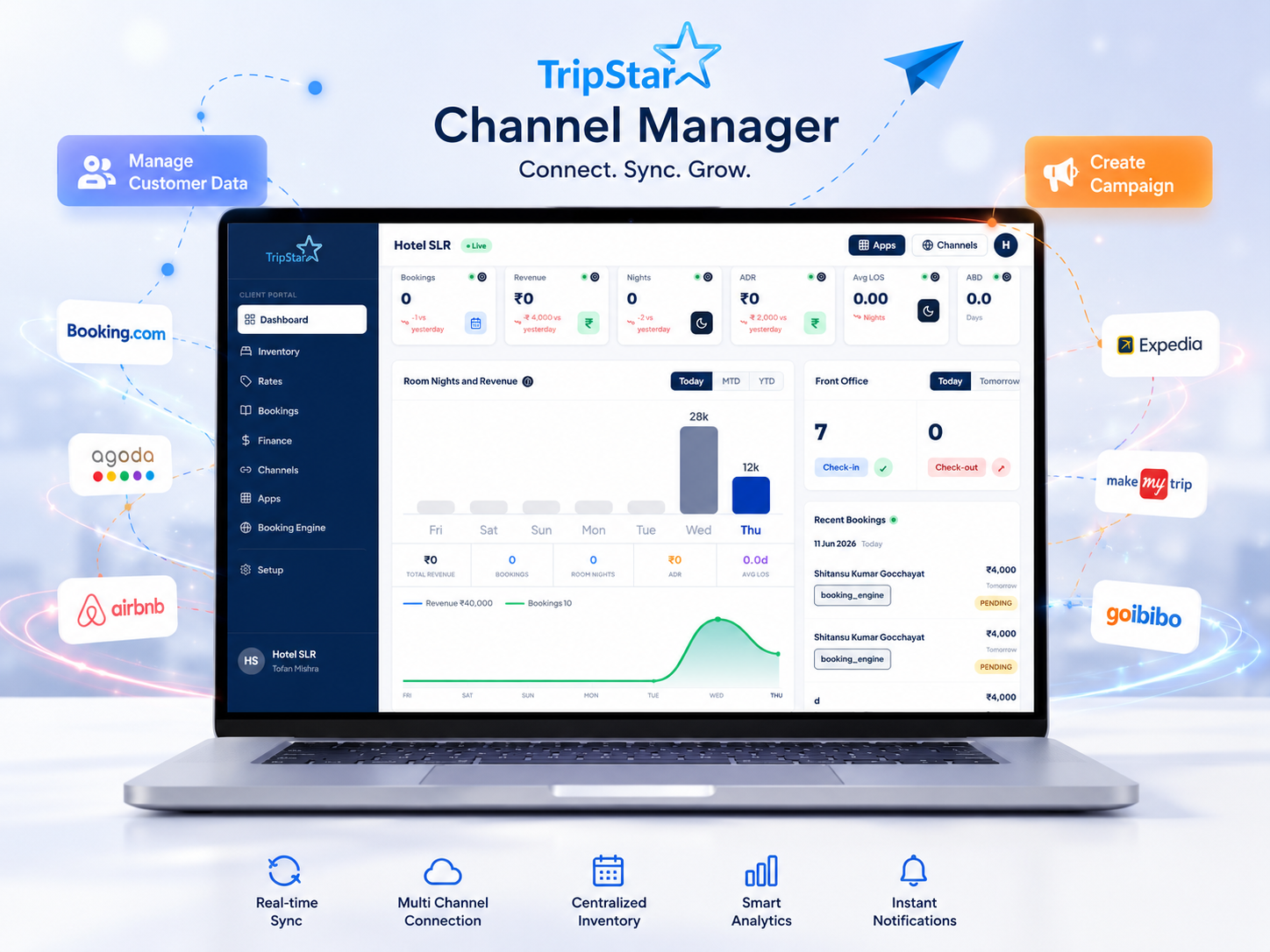
Manual OTA updates don't scale past a handful of rooms. This is where a channel manager becomes essential, it pushes rate and availability changes to every OTA in real time from one place, which removes the risk of double bookings entirely. Pairing that with a proper Property Management System (PMS) means your front desk, revenue and OTA data all stay in sync automatically.
Getting Started
If your hotel is currently managing OTA listings manually across multiple logins, the fastest win is usually consolidating onto a channel manager and auditing your top 3 listings for pricing and image quality. From there, ongoing management is what protects the gains.
Read next: 5 Ways a Channel Manager Boosts Hotel Revenue.

Tripstar Team
We build OTA management, PMS, channel manager and booking engine software for hotels across India. This article draws on what we see across live hotel accounts every day.